

Introduction:The Home Floor Is Your New Gym: A Science-Backed Six Pack Workout Plan Without a Single Piece of Equipment
If you’ve scrolled through fitness social media, you’ve seen the promise: “Get abs in 5 minutes a day with this one weird crunch!” I bought into that fairy tale for years. I spent high school doing 200 crunches every night on my bedroom floor, wondering why my mid-section looked exactly the same month after month. It wasn’t until I threw out the outdated playbook and rebuilt my entire approach that I finally saw those elusive lines appear. The game-changer wasn’t a gadget or a gym membership—it was understanding that a truly effective six pack workout plan at home doesn’t just target the rectus abdominis; it rewires how your entire core fires.
In this guide, I’ll walk you through the exact no-equipment plan that transformed my midsection, backed by sports science and real-world sweat. No sit-up marathons, no gimmicks. Just smart, home-friendly programming that works.
The Myth of Spot Reduction & Why Your Six Pack Workout Plan Needs a Reality Check
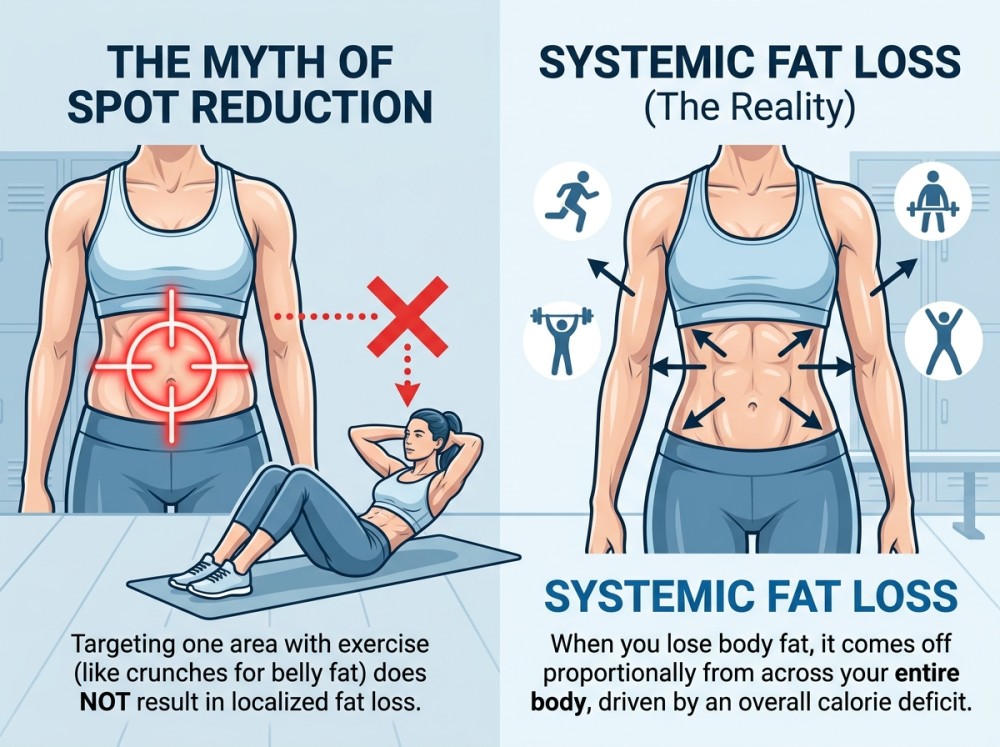
Before we jump into the moves, let’s kill a stubborn myth: you cannot spot-reduce belly fat. The idea that a thousand leg raises will burn the fat directly above your hip bones is as scientifically sound as a chocolate teapot. Fat loss is systemic, driven by a caloric deficit and hormonal environment, not by the number of crunches you endure. Where your body stores fat first and releases it last is largely genetic.
So why bother with a six pack workout plan at all? Because building the musculature of your core is non-negotiable for definition. Think of your abs like any other muscle group. You wouldn’t curl a soup can fifty times and expect enormous biceps. You need progressive overload, time under tension, and variation. A recent review published by the National Academy of Sports Medicine emphasizes that effective core training must challenge stability, prevent unwanted motion (anti-extension, anti-rotation), and be progressed systematically—principles most crunch-heavy routines ignore completely.
Once I accepted that my kitchen habits revealed my abs but my living room floor built them, I completely redesigned my approach. I stopped exercising my neck into oblivion and started training my core like an athlete.
Old-School vs. Science-Backed: Comparing Home Ab Workouts
| Exercise Type | Classic Example | Smarter Swap | Why Science Prefers the Smarter Swap |
|---|---|---|---|
| Spinal Flexion | Crunches, full sit-ups | Hollow body holds, dead bugs | Excessive spinal flexion can lead to disc issues over time. Hollow body holds train the rectus abdominis in a braced, elongated position that builds true core stiffness rather than just superficial squeezing. |
| Hip Flexion | Traditional leg raises (on floor) | Reverse crunches with controlled lowering | Lying leg raises often yank on the lumbar spine via overactive hip flexors. Reverse crunches keep the pelvis tilted posteriorly, protecting the lower back while intensely targeting the lower abdominals. |
| Rotation | Russian twists (fast, unweighted) | Bird dog with rotation, plank thread-the-needle | Speed-twisting a weightless torso often uses momentum, not muscle. Slower, controlled anti-rotation movements (like plank shoulder taps) and quadruped rotation require true oblique engagement and spinal stability. |
| Plank Work | Static plank (held for time) | High-to-low plank, plank walkouts | A 3-minute static plank can become a test of boredom tolerance, not strength. Dynamic plank variations constantly challenge the anti-extension and anti-rotation demands, building far more functional core endurance and visible density. |
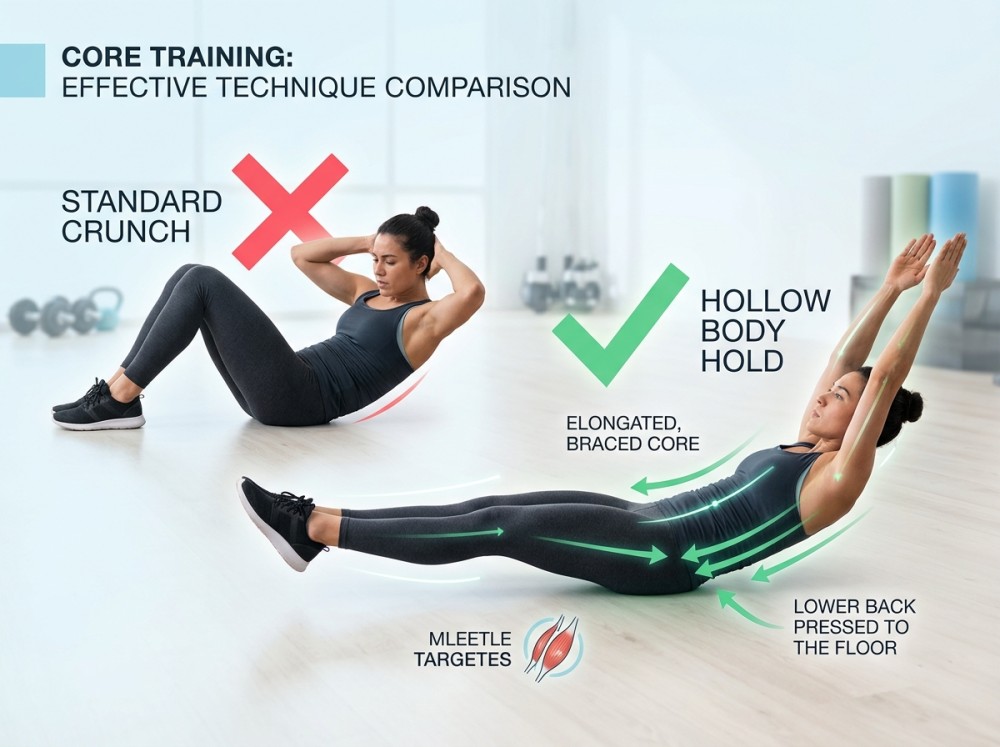
The American Council on Exercise (ACE) commissioned a study using EMG to rank the best abdominal exercises, and moves like the bicycle crunch and captain’s chair leg raise top the list. However, when limited to home and no equipment, the plank-based, anti-extension variations frequently demonstrated comparable or even superior muscle activation in the obliques and deep core compared to the classic crunch. You can dig deeper into that research right here on ACE’s website.
The takeaway? A top-tier six pack workout plan replaces momentum with tension and swaps quantity for controlled discomfort.
The Core Principles That Make This Home Plan Work
You can’t just swap a crunch for a plank and call it a day. To force your abs to grow without external resistance, you must exploit three principles every session.
1. Create Full-Body Tension – The “Hollow” Connection
The hollow body position is gymnastics gold. It’s the act of pressing your lower back into the floor, drawing your ribs down, and extending your limbs just enough to create a shaking, whole-body contraction. When you master this shape, every single exercise in your home plan turns into an intense abdominal challenge. Even a simple shoulder tap from a plank becomes an ab-carving movement because you’re fighting to keep your hips from dipping or rotating. Next time you’re in a dead bug, imagine a string pulling your navel to your spine and another pulling your ribs toward your hips. That’s the difference between going through the motions and waking up sore.
2. Progressive Overload Without Plates
I spent years stuck, wondering why bodyweight ab work plateaued. Then I learned to progress by manipulating time under tension and leverage instead of just adding reps. For example, if a standard plank feels easy, you don’t just hold it for two minutes. You slowly walk your hands forward to make the plank longer, increasing the distance between your toes and shoulders. On a hollow body hold, you extend your legs lower toward the floor without letting your lower back pop up. That millimeter of extra range of motion can light up your lower abs far more than fifty knee tucks ever could. This is the secret sauce that a generic six pack workout plan often misses.
3. Don’t Isolate, Integrate
Your core connects everything. A study published in the Journal of Strength and Conditioning Research showed that compound exercises like push-ups with a full-body brace generate significant core activation. When I replaced some isolated floor work with mountain climber variations and suspended single-leg planks, my ab definition improved because my core was forced to stabilize against dynamic limb movement—exactly what it’s designed to do. Your home workout should include exercises where your limbs move independently while your torso remains a rock.
The Ultimate At-Home Six Pack Workout Plan (Zero Equipment)
This workout plan runs on a 3-day cycle you can weave into any weekly schedule. It focuses on anti-extension, anti-rotation, and oblique work, balanced with hip flexion that won’t trash your back. I recommend doing it on Monday, Wednesday, and Friday, leaving at least one rest day between sessions. If you’re also doing strength training or running, place this at the end of your session or on a separate day.
Workout Format: Perform each circuit three times. Move from one exercise to the next with minimal rest. Rest 60 seconds after completing all four exercises, then repeat. Quality over speed.
Circuit A: Foundation Builder (Weeks 1-3)
| Exercise | Duration & Coaching Cue |
|---|---|
| 1. Dead Bug | 45 seconds. Slow, exhale heavily. Press your right hand against your left knee for extra spinal protection. Fight to keep the lower back glued down. |
| 2. Forearm Plank with Shoulder Taps | 45 seconds. From forearms, widen feet for stability, then tap your right shoulder with your right hand while pushing through the left forearm. Imagine you’re balancing a glass of water on your lower back. |
| 3. Reverse Crunch | 45 seconds. No momentum. Tilt your pelvis to curl your tailbone up, then lower your legs only as far as you can without arching. Go slow—I often count “three down, one up.” |
| 4. Bird Dog | 45 seconds alternating. Extend opposite arm and leg, pause for a 2-count at the top. Tuck your chin to keep your spine neutral. This builds the deep multifidus and pelvic stability. |
Circuit B: Anti-Rotation & Dynamic Control (Weeks 4+)
Once Circuit A feels manageable, graduate here. This is where my own transformation became visible.
| Exercise | Duration & Coaching Cue |
|---|---|
| 1. Hollow Body Hold | 30 seconds hold. Arms overhead, legs extended at eye level. Shake. Breathe. It’s supposed to be hard. If your lower back lifts, bring your legs higher. |
| 2. High Plank to Low Plank (Walk Downs) | 45 seconds. Place one hand at a time down to forearms, then back up. Minimize hip sway—if you look in a mirror, your hips shouldn’t dance side to side. |
| 3. Thread the Needle (Side Plank Variation) | 30 seconds per side. From side plank, reach your top arm underneath your body, rotating your torso toward the floor, then open back up. This trains the obliques through a full, controlled range. |
| 4. Mountain Climbers (Slow Tempo) | 45 seconds. Drive your knees toward your opposite elbow in a cross-body motion. Keep your hips down and core braced. Exhale forcefully on each drive.The “Ab Finisher” (Two Minutes of Fire) |
The “Ab Finisher” (Two Minutes of Fire)
After your circuit, set a timer for 2 minutes and perform alternating flutter kicks (30 seconds) directly into a long-lever plank hold (30 seconds) without resting. Repeat until the timer ends. This burns through the last of your glycogen and demands you maintain form under fatigue—where true core strength is built. I do this twice a week, and it’s humbling every single time.
Weekly Structure Template
- Monday: Circuit A + Ab Finisher
- Tuesday: Light cardio or full-body bodyweight strength routine (engage core throughout)
- Wednesday: Circuit B
- Thursday: Active recovery or yoga
- Friday: Circuit A or B (choose based on how you feel) + Ab Finisher
- Saturday: Long walk, hike, or sport
- Sunday: Rest
The Missing Piece: A Crash Course in Core Nutrition
I’d be doing you a disservice if I didn’t mention the kitchen, even in a workout-focused piece. You can carve the most chiseled six-pack on the planet, but if it’s blanketed by a layer of visceral fat, it will remain your best-kept secret. Rather than a fad diet, focus on three evidence-based habits:
- Prioritize protein at every meal. Aim for roughly a palm-sized portion. Higher protein intake supports muscle repair and boosts satiety, making a slight caloric deficit far more sustainable.
- Manage liquid calories. Sugary coffees, sodas, and even excessive fruit juices can stall fat loss without making you feel full. Water, black coffee, and herbal tea became my best friends.
- Sleep is non-negotiable. Research from the Annals of Internal Medicine showed that sleep deprivation blunts fat loss and increases muscle loss when in a calorie deficit. If you’re grinding through this six pack workout plan on 5 hours of sleep, you’re sabotaging your results.
For a deeper dive into the eating strategies that finally revealed my lower abs, I’ve put together a straightforward nutrition guide for visible abs. No calorie counting apps were harmed in the making of it
Taking the First Step (And Making It Stick)
I wish I’d known earlier that a quiet, deliberate hollow body hold on my living room floor would do more for my core than the hundreds of frantic crunches I used to pound out. The difference isn’t talent or genetics; it’s training smarter and respecting the science of how muscles actually grow.
Your body doesn’t know you don’t have a cable machine or a pull-up bar. It only knows tension, time, and consistency. Commit to the three-day-a-week schedule above for six weeks, pay attention to your form in every single rep, and support it with sane nutrition. If a former crunch-addict like me can uncover those lines using nothing but a patch of floor and a determination to not fling my body around like a fish, you absolutely can too.
Now I’d love to hear from you: Which of these science-backed ab exercises have you tried, and which one humbled you the most? Drop a comment below. And if you want the free, printable PDF version of this six pack workout plan to stick on your fridge, pop your email in the box below and I’ll send it straight to your inbox.