
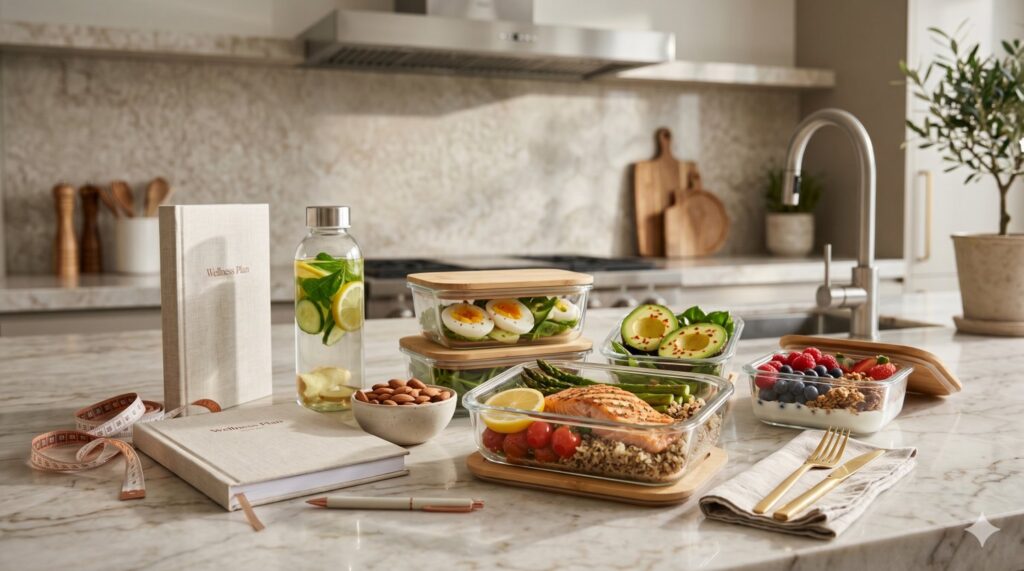

Introduction: Ever felt like healthy eating is just too complicated?
Between conflicting advice online and the endless parade of trendy diets, it’s easy to feel overwhelmed. It seems like every week there is a new “superfood” or a villain ingredient we should avoid at all costs. But here is the reality: a simple, sustainable healthy diet plan doesn’t have to be complicated.
In fact, the most recent global research has converged on a handful of powerful principles that can dramatically transform how you feel, think, and age. Whether your goal is to lower cholesterol, steady your energy levels, or simply feel lighter and more alive, following a healthy diet plan for just seven days can reset your entire system.
Let’s dive into the science, look at what actually works, and map out seven days that will change your relationship with food.
The Science is Converging: What the New Guidelines Actually Say
For decades, nutrition advice seemed to change with the wind. However, a major shift has occurred. In January 2026, the U.S. Departments of Agriculture (USDA) and Health and Human Services (HHS) released the Dietary Guidelines for Americans, 2025–2030.
This latest edition marks a significant reset in public health nutrition. Instead of focusing on isolated nutrients (like just counting grams of fat or carbs), the guidelines now prioritize whole dietary patterns centered on “real food.” They emphasize minimally processed foods, higher protein intake, and a clear call to cut out ultra-processed items laden with artificial colors, preservatives, and added sugars. As a Harvard T.H. Chan School of Public Health analysis notes, the new guidelines are “hard on added sugar” and appropriately prioritize fiber-rich whole grains.
The World Health Organization (WHO) echoes this sentiment. Their 2026 updated guidance states that everyone over ten years old should aim for at least 400 grams of fruits and vegetables daily (about five servings) and limit free sugars to less than 10% of total energy intake.
So, what does this mean for your plate? It means the era of counting every single calorie is fading, replaced by a focus on a healthy diet plan rooted in quality, variety, and balance.
Why Bother? The Tangible Benefits of a Real Food Diet
Committing to a healthy eating pattern for just seven days offers immediate rewards. According to a 2025 study in The Lancet Healthy Longevity, people whose diets were rich in vegetables, fruits, whole grains, legumes, and plant-based foods had 32% lower odds of developing two or more chronic illnesses.
Long-term adherence can reduce chronic disease incidence by 9% to 19% after 15 years. Furthermore, a meta-analysis published in 2026 found that every 1-point increase in Mediterranean diet adherence reduced mortality risk by about 4% .
From an immediate perspective, swapping processed junk for whole foods stabilizes blood sugar, reduces inflammation, improves metabolic function, keeps you full for longer, supports heart health, and helps balance energy levels
Choosing Your Path: Ranking the Top Evidence-Based Diets
| Diet Pattern | Best For | Core Focus | 2025 Ranking |
|---|---|---|---|
| Mediterranean Diet | Overall longevity & Heart health | Olive oil, fish, nuts, veggies, social eating | #1 (4.8/5) |
| DASH Diet | Lowering blood pressure | Low sodium, potassium-rich foods, lean protein | #2 (4.6/5) |
| Flexitarian Diet | Gradual weight loss & Sustainability | Plant-forward eating with occasional meat | #3 (4.5/5) |
| MIND Diet | Brain health & Preventing dementia | Combines Mediterranean & DASH; focuses on berries & leafy greens | Top 4 |
Data sources: HealthDay and Mayo Clinic (2025/2026)
Healthy Diet Plan: Quick Comparison
| Meal Component | Poor Choice | Better Choice |
|---|---|---|
| Breakfast | Sugary cereal | Oats + fruits + nuts |
| Lunch | Fried fast food | Grilled chicken + rice + salad |
| Snacks | Chips, soda | Nuts, yogurt, fruit |
| Dinner | Heavy oily meals | Lean protein + vegetables |
| Drinks | Soft drinks | Water, green tea, lemon water |
Small swaps often create bigger long-term results than extreme diets.
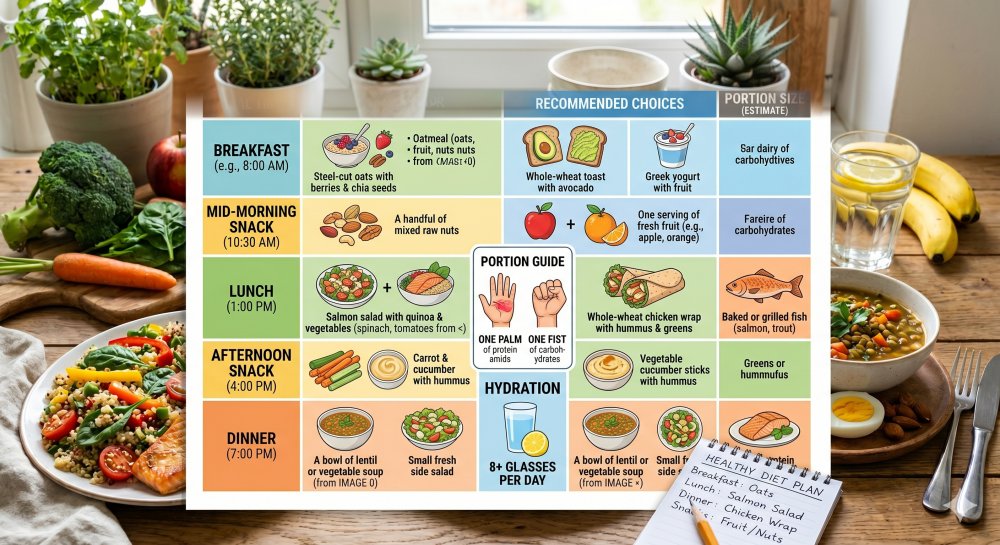
The Blueprint: Your 7-Day Healthy Diet Plan
The following 7-day plan is designed to be flexible. It prioritizes lean proteins, fruits, vegetables, eggs, whole grains, and fermented dairy (like yogurt or kefir) for gut health. This plan is rooted in the principles we discussed: no “magic pills,” just real, delicious food.
👉 Note on Portions: This plan is based on a general guide of roughly 1,800 to 2,000 calories per day. If you are very active, feel free to increase portion sizes slightly; if you are sedentary and petite, reduce them slightly. Listen to your body.
Days 1 – 3: The Activation Phase
Day 1: The Fresh Start
- Breakfast: Greek yogurt (plain) with a handful of blueberries and a sprinkle of low-sugar granola.
- Lunch: Large spinach salad topped with quinoa, chickpeas, cucumber, cherry tomatoes, feta cheese, and a lemon-oregano vinaigrette.
- Dinner: Baked salmon with roasted asparagus and sweet potato wedges.
- Snack: A medium apple with 1 tablespoon of natural peanut butter.
Day 2: Fiber Focus
- Breakfast: Oatmeal made with rolled oats, topped with sliced bananas, walnuts, and a dash of cinnamon.
- Lunch: Leftover salmon and asparagus from last night, flaked into a whole-grain wrap.
- Dinner: Turkey and black bean chili (load it with onions, bell peppers, and tomatoes). Serve with a side of avocado.
- Snack: A hard-boiled egg and a handful of baby carrots.
Day 3: Anti-Inflammatory Boost
- Breakfast: Smoothie: 1 cup unsweetened almond milk, 1 scoop plant protein, 1 handful spinach, 1/2 banana, and 1 tablespoon flaxseed.
- Lunch: Leftover turkey chili.
- Dinner: “Buddha Bowl”: Brown rice base, topped with roasted cauliflower, sautéed kale, shredded chicken, and a drizzle of tahini dressing.
- Snack: A small pear or a few whole-grain crackers with cottage cheese.
Days 4 – 7: Variety and Sustainability
Day 4: Meatless Monday (Any day works!)
- Breakfast: Two poached eggs on whole-grain toast with half an avocado.
- Lunch: Leftover Buddha Bowl.
- Dinner: Lentil pasta with a tomato-basil marinara sauce and a side of steamed broccoli.
- Snack: A handful of almonds and dark chocolate (85% cocoa).
Day 5: Heart Health
- Breakfast: Overnight oats made with chia seeds, coconut yogurt, and raspberries.
- Lunch: Tuna salad (mix tuna with Greek yogurt instead of mayo) stuffed into a bell pepper half or on a bed of lettuce.
- Dinner: Grilled chicken skewers with a cucumber-tomato salad and a small whole-wheat pita.
- Snack: A glass of kefir or a banana.
Day 6: High Energy
- Breakfast: Scrambled tofu with spinach, mushrooms, and nutritional yeast.
- Lunch: Leftover grilled chicken and cucumber salad.
- Dinner: Shrimp stir-fry with brown rice, bok choy, snap peas, and ginger.
- Snack: Rice cakes with smashed avocado and everything bagel seasoning.
Day 7: Gut Reset & Prep Day
- Breakfast: Smoothie bowl: blended frozen berries, spinach, protein powder, topped with granola and coconut flakes.
- Lunch: Leftover shrimp stir-fry.
- Dinner: Sheet-pan dinner: Chicken sausage, chunks of sweet potato, and Brussels sprouts tossed in olive oil and roasted.
- Snack: A small apple or pear.
Pro-Tips for Winning the Week (Meal Prep & Mindset)
A plan is only as good as your ability to execute it. Here is how to make this healthy diet plan stick without burning out.
1. Master the “Batch Cook”
Don’t cook every meal from scratch. Spend 90 minutes on Sunday prepping:
- Roast Vegetables: Toss sweet potatoes, broccoli, and cauliflower in olive oil. Roast them all at once.
- Cook Grains: Make a large pot of brown rice or quinoa to use as a base all week.
- Hard-Boil Eggs: These become instant protein snacks.
- Wash & Chop: Get your greens and veggies ready to grab.
2. Embrace the Plate Method
You don’t need to weigh your food. At every lunch and dinner, visualize this:
- ½ plate: Non-starchy vegetables (leafy greens, broccoli, peppers).
- ¼ plate: Lean protein (chicken, fish, tofu, beans).
- ¼ plate: Complex carbohydrates or whole grains (sweet potato, quinoa, brown rice).
3. Hydrate Intelligently
The global dietary consensus is clear: make water your primary beverage. The WHO emphasizes that sugar-sweetened beverages should be completely avoided. Keep a reusable bottle on your desk or in your bag.
Avoiding the “All-or-Nothing” Trap
It is very common to have a “perfect” Monday and a “good” Tuesday, only to cave and eat a processed snack on Wednesday. Many people then think, “Well, I ruined it,” and revert to old patterns.
But the science of behavior change tells us that progress is not linear. A 2025 analysis of dietary habits published in health psychology reviews suggests that the key to long-term success is choosing a plan you can imagine following for months, not weeks, and starting slowly.
If you slip up? So what. Just make the next meal a healthy one. This is not a jail sentence; it is a lifestyle reset.
Final Thoughts: Your Journey to Vitality Starts Now
The food choices you make today are “sending signals” to your immune system and your cells. Shifting from a diet of convenience to one of nourishment is the single most powerful thing you can do for your future self.
The bottom line is this: Food is medicine—and it’s the most delicious medicine you will ever take.
You now have the roadmap, the weekly schedule, and the expert-backed strategies to succeed. This 7-day healthy diet plan is your springboard. Don’t wait for Monday; start with your very next meal.
Let’s Keep the Conversation Going
Did this plan resonate with you? Which diet style (Mediterranean, DASH, or Flexitarian) do you think fits your life best? Hit reply or drop a comment below—I read every single one. And if you are ready to take this further, subscribe to our weekly newsletter for more science-backed meal-prep guides and delicious recipes delivered straight to your inbox.
Happy eating